
AI Made the Creative Process Visible
AI has accelerated the creative process, but it hasn’t replaced it. As text-to-image tools make storytelling faster and more accessible, the real differentiator remains discipline, clarity and creative intent.
Chris Jones
6/8/2025
I’ve been experimenting with text-to-image AI. Not to chase the hype, but to better understand what it means for how we tell stories. Here’s what I’m seeing: the opportunity is big, the risk is real, and how we show up creatively still matters (and always will).
There’s a lot of noise right now about tools and speed and scale. And sure, AI can deliver all three. But fast isn’t always better. More isn’t always meaningful. And the volume of content being produced right now doesn’t guarantee any of it is worth remembering to the people we're trying to reach.
Storytelling is more available than ever. That’s a win. But it also raises the bar. The question becomes: If anyone can generate compelling visuals in seconds, what makes the work yours?
I don’t think the answer is to avoid AI. I believe we should lean into it, but without losing the ethos that makes our work human. It’s not about resisting change. It’s about carrying our creative standards forward, even as the tools evolve.
Here’s the thing most people don’t see: prompting well is not a shortcut. It’s not vibes and luck. It’s precision. The best AI-generated images don’t start with a casual sentence. They start with a shot list. A lighting plan. A character sketch. A setting, a mood, a sense of time. Every element accounted for.
That level of detail? That’s not new. That’s the creative process. We’ve always done that work. Prompting well just requires us to apply the same discipline in a new format.
I used to think a prompt was just a clever phrase. Then I saw the work of a creator named Ohneis, and it completely reframed my thinking. Their process reads more like film direction than tech experimentation. It reminded me that prompting isn’t the point. Storytelling still is.
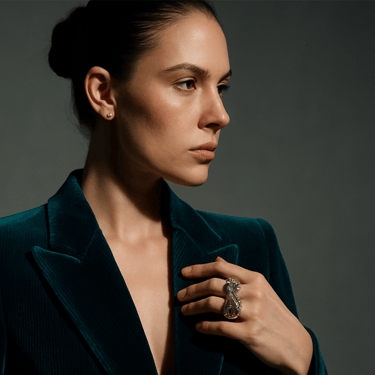
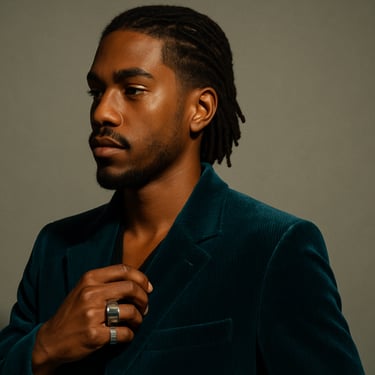
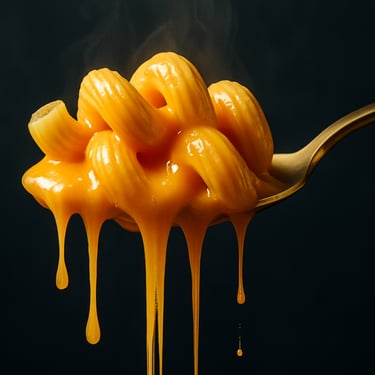
Here are examples of images I generated:
These people aren't real. But they look like they could be. And in the right context, they could carry an entire campaign. And with tools like Sora, those still images could become a full video. Same goes for that photo of mac and cheese. It’s not homemade, but it sure does make me hungry.
This is all exciting. And also kind of unsettling.
Because when these tools become universal, they also risk making everything feel the same. When everything feels the same, creativity stops standing out, and starts fading into the background.
If everyone is using AI to tell their story, maybe the most original thing we can do is keep making the work only we can make... if that even remains possible.
That’s not nostalgia. That’s strategy. But is it sustainable?
I'm not about resisting the future. I'm about meeting it with intention. AI can help us scale. But it’s on us to decide what’s worth scaling. The tools are evolving fast. The challenge is to stay clear on what we actually want to say.
Thanks for reading, and remember that the process still matters. Now more than ever.
Subscribe to The Dispatch
Be notified as soon as a new Dispatch is published so you can stay informed on the shifts shaping digital marketing.